Robust and reliable heavy-duty conveyor technology was required for the automated feeding of heavy steel frames into a robotic station.
The aim was to develop a material flow solution that would enable both the reliable delivery of goods to the unloading station and the controlled return of empty pallets, whilst always taking into account forklift operations and personal safety.
Steel conveyor systems for steel racks
Client project
Key technical specifications
| Conveyed material | Steel frame |
| Measures | 1,000mm x 2,000mm x 455mm (LxWxH) |
| Weight of the material to be conveyed | max. 500kg |
| Conveying direction | transverse / longitudinal |
| Cycle time | max. 20 |
Conveyor technology for heavy-duty beams in the robot cell
Chain conveyor with integrated cross-conveyor and return system
Background and objectives
Automated feeding to the robot station
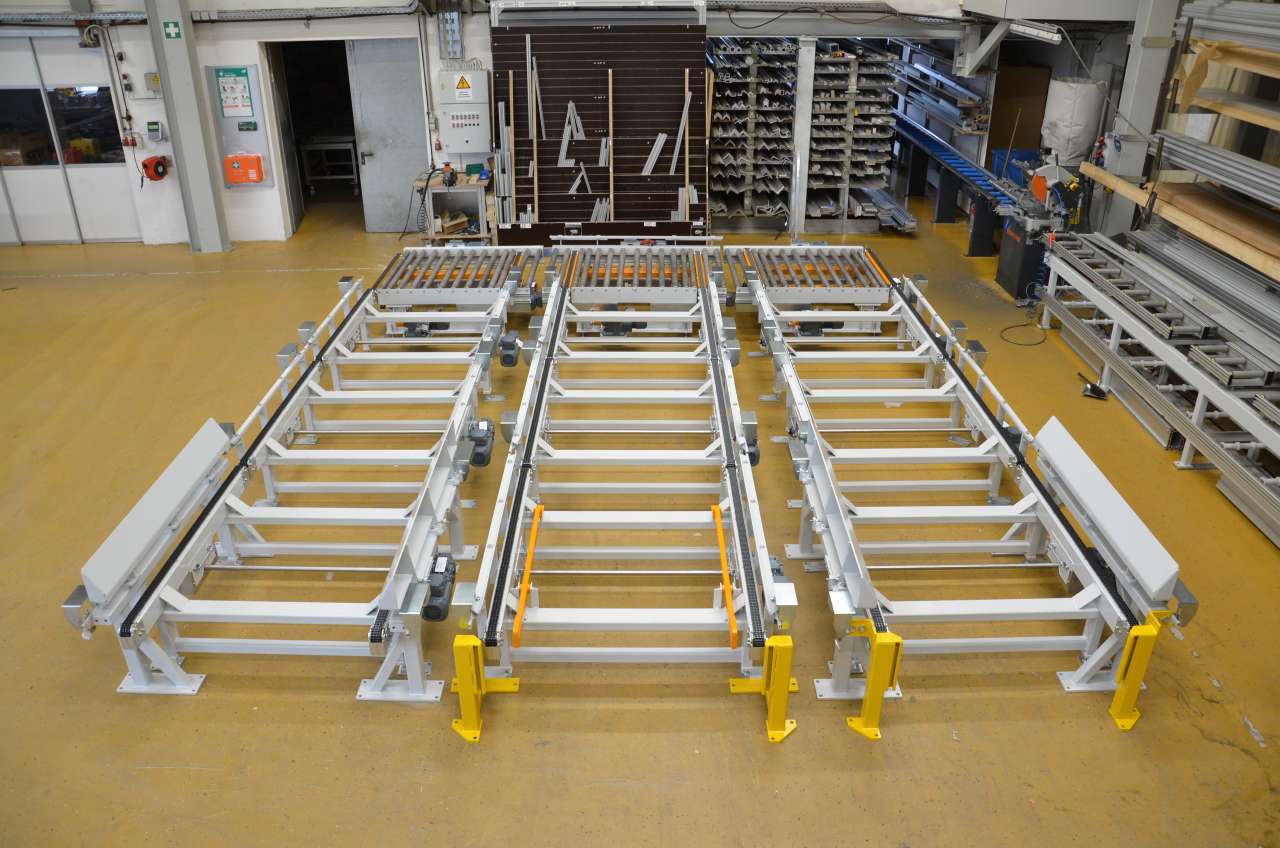
The full steel racks are loaded onto the chain conveyors at both ends using forklift trucks. Integrated side guides facilitate loading and ensure stable guidance during transport.
The chain conveyors handle the heavy-duty transport to the unloading point in the robot cell, where the racks are emptied automatically.
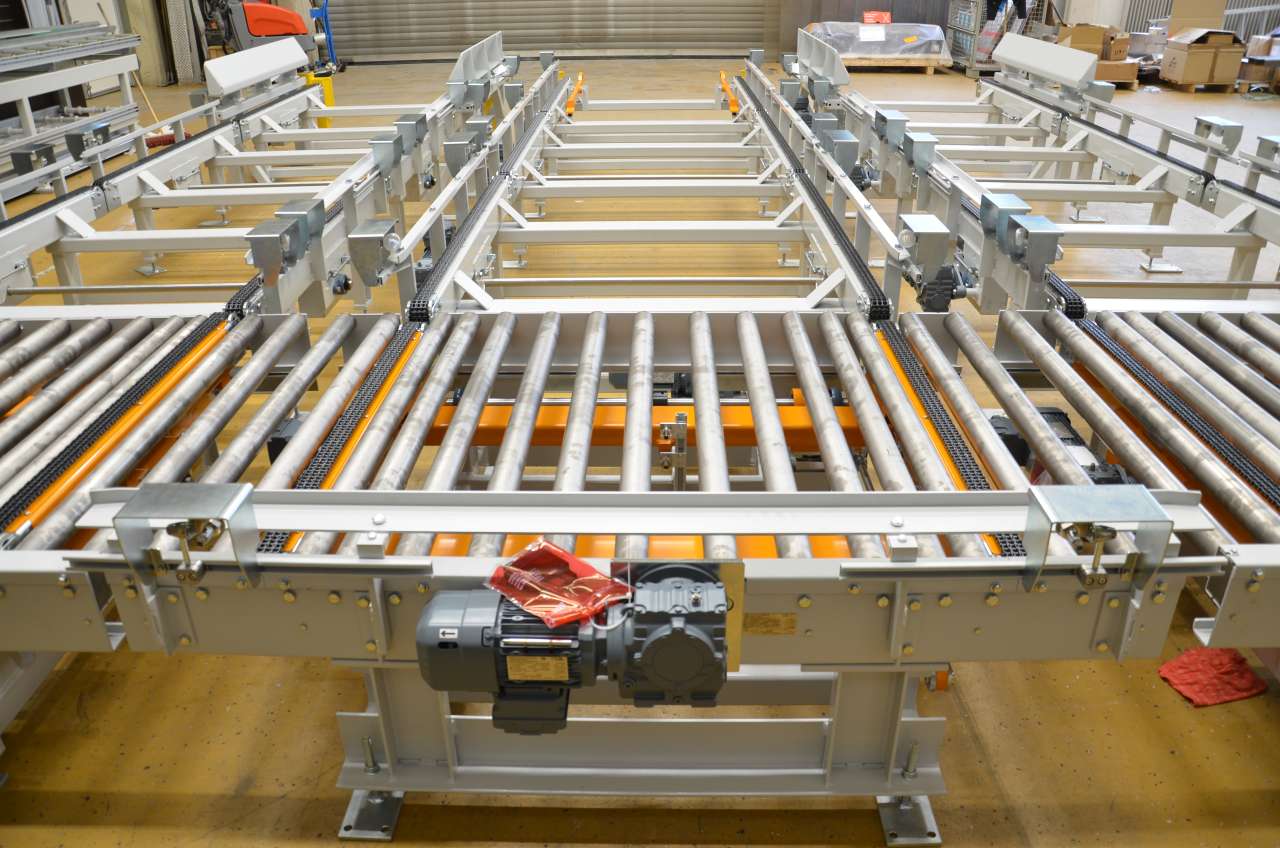
Integrated cross-conveyor and return system
Once unloading is complete, the empty steel racks are transferred to a central return conveyor using a stacker.
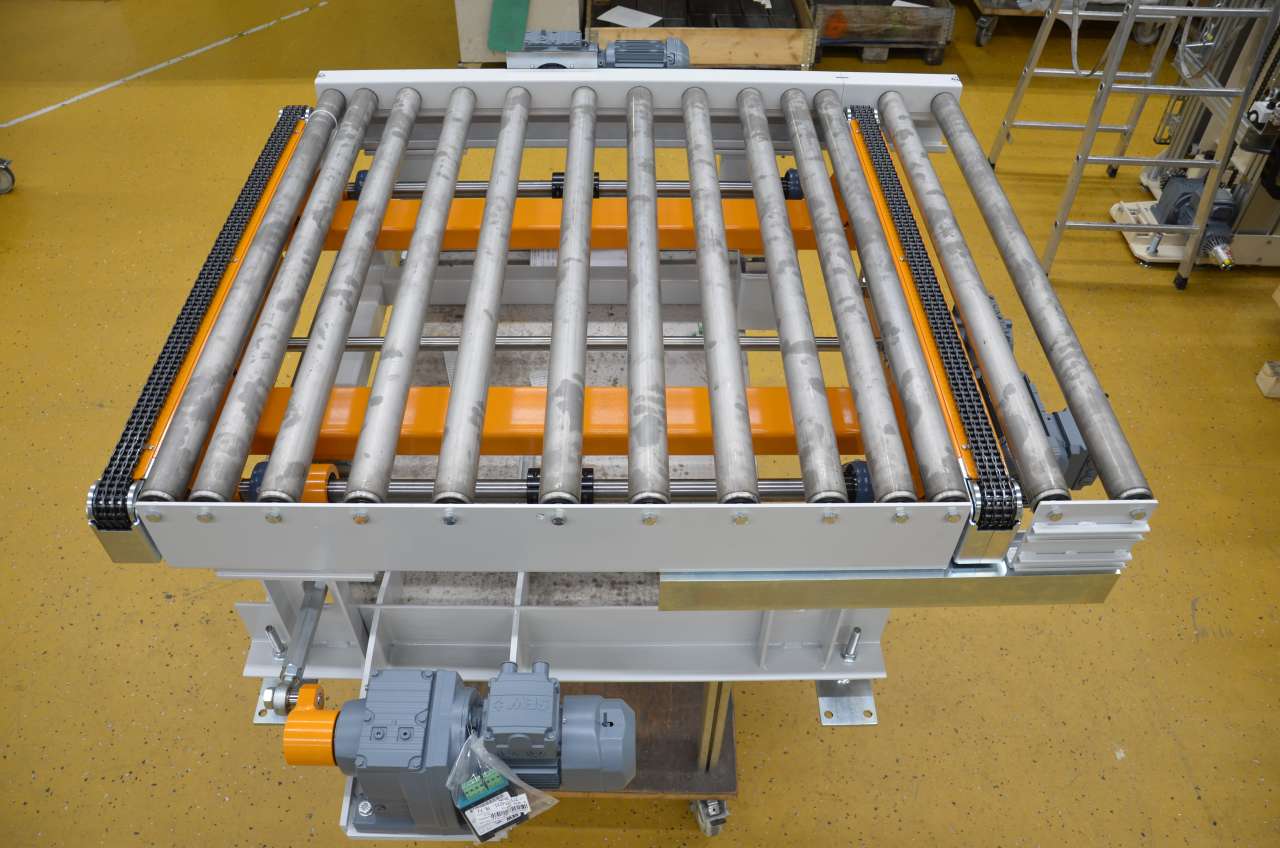
The vertical conveyors are fitted with integrated, motorised heavy-duty idler rollers, which enable space-saving cross-conveying within the system.
At the end of the return route, the forklift is positioned for collection.
Reliable detection and ergonomic integration
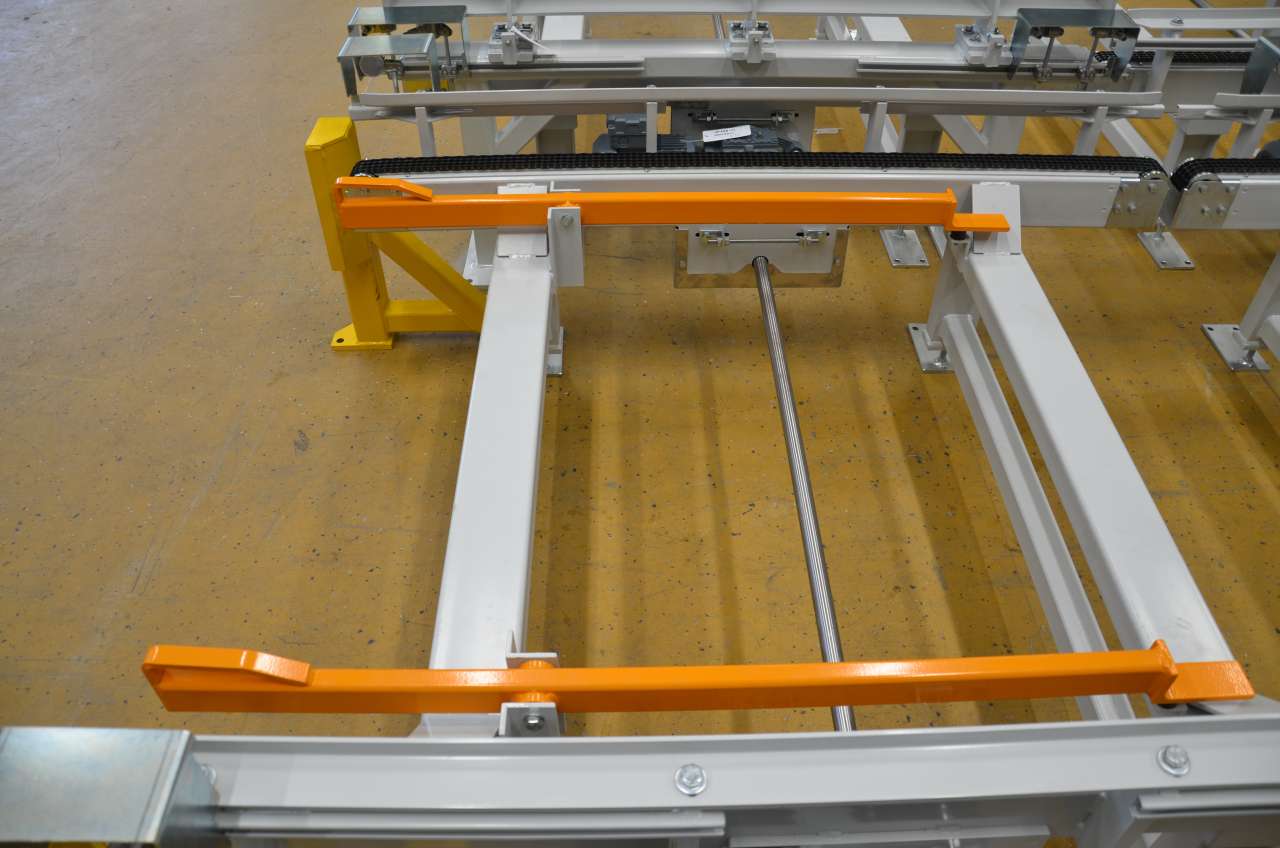
At the unloading point, the empty steel racks are moved into a secure transfer position via an integrated tilting mechanism.
The design minimises the risk of pinch points and ensures safe interaction between the conveyor system and forklift operations.
Among other things, the conveyor system solution implemented enables:
Reliable feeding of heavy-duty pallets to the robot station
Automated return of empty steel racks
Space-saving integration of cross-conveying
Safe transfer to forklifts without risk of pinching
Robust material flow architecture for industrial heavy-duty applications
Gallery
Take a look at the heavy-duty support rollers, drive system and design of this solution, straight from our production line.
Conveyor system components
The complete system – planned, designed and manufactured by TEGEL-TECHNIK – includes, amongst other things:
Customised heavy-duty handling systems for robotic stations
Are you planning an automated feeding system for heavy workpiece carriers to a robot cell, or would you like to make your existing heavy-duty processes more efficient?
TEGEL-TECHNIK develops robust conveyor systems for in-house heavy-duty transport – tailored to weight, component geometry and process requirements. From analysing your material flow structure through to technical design and commissioning, we provide comprehensive support for your project.
Whether it’s a reliable feed to the robot station, integrated cross-conveying using a lift transfer unit, or the safe return of empty steel racks – we deliver conveying solutions that integrate seamlessly into your production environment.
Talk to us about your requirements. Together, we’ll develop a conveying solution for your heavy-duty application.
Phone
+49 7322 9611–0FAQ – Heavy-duty handling technology for robotic stations
Heavy-duty handling technology must be able to reliably handle heavy loads, large dimensions and dynamic loads.
In addition to mechanical stability, precise guidance is crucial for transporting workpiece carriers safely to the robot station. At the same time, feeding, unloading and return must be coordinated within a seamless material flow architecture.
In heavy-duty conveyor systems, load-bearing rollers provide load-bearing guidance and support for heavy workpiece carriers during transport.
Heavy-duty support rollers ensure even load distribution and smooth running within the conveyor line, particularly when used with steel frames or solid component supports.
When used in conjunction with chain conveyors or integrated cross-conveyor units, they help to move heavy loads through the plant reliably and with minimal wear.
In production environments involving heavy-duty pallets, conveyor systems and forklift operations are often used in conjunction with one another.
Special transfer points and positioning devices – such as tilting platforms – ensure that steel frames are positioned in a safe receiving position. This reduces the risk of crushing for operating personnel and keeps the flow of materials under control.